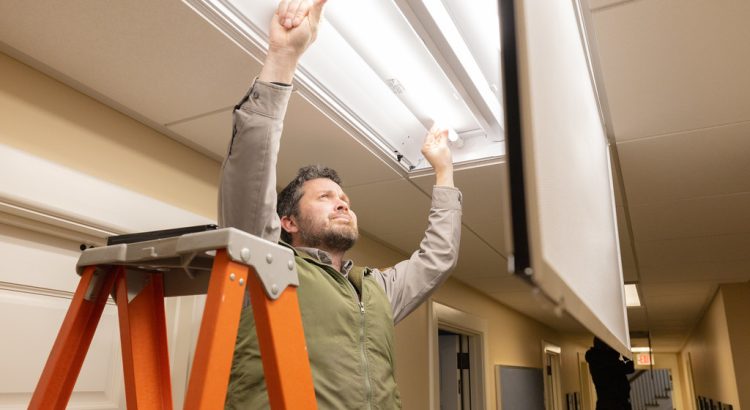
If a worker is hurt on your property or damages your neighbor’s fence, someone’s insurance will need to pay. Make sure it isn’t only yours.
Licensing, permit, lien and tax rules vary by state and city and change over time. This guide is general information, not legal or tax advice; check with your local building department, state licensing board or a professional for your situation.
Checklist
- General liability insurance covers damage or injury the contractor causes to others.
- Workers’ compensation covers the contractor’s employees if they’re hurt on the job.
- Ask for a certificate of insurance and confirm it with the insurer.
- A bond is not the same as insurance; it can help if the contractor fails to meet obligations.
Construction work involves ladders, power tools and heavy materials. When something goes wrong, the question is whose insurance responds. Here’s what to ask for.
General liability insurance
This covers damage or injuries the contractor causes to other people or property, such as a burst pipe that floods your kitchen or a dropped beam that damages your car. Without it, you may end up claiming on your own policy or going to court.
Workers’ compensation
This covers medical costs and lost wages for the contractor’s employees if they’re injured on the job. Most states require employers to carry it, with exemptions that vary by state. If a worker without coverage is hurt on your property, you could face a claim.
How to check
- Ask for a certificate of insurance for both general liability and workers’ compensation.
- Read it: the business name should match your contract, and the policies should be current through the end of your job.
- Call the insurance agent or company listed to confirm the policy is active. Certificates can be outdated or fake.
- Ask to be listed as the certificate holder, so you’re notified of certain changes. Your contractor can request this from their insurer.
Tip
Check coverage for subcontractors too. On larger jobs, much of the work may be done by other companies, and each should have its own insurance.
Bonds are different
A license bond or surety bond is a financial guarantee, often required for licensing. If a contractor breaks the law or fails to meet obligations, a claim against the bond may help you recover some losses, up to the bond amount. Bonds are usually small compared with the cost of a major project, so they’re a backstop, not protection for the whole job.
Your own policy
For big projects, call your homeowners insurer before work starts. Ask how coverage works during construction and whether you’ll need to update your policy afterward.
Insurance is one part of checking a contractor; verifying the license is the other. Put the insurance requirement in writing using our contract checklist.
Homeowners ask
Can I be liable if an uninsured worker is hurt at my home?
Possibly. Depending on your state and the situation, an injured worker might try to claim against you or your homeowners policy. Hiring insured contractors reduces that risk.
Do sole proprietors need workers’ compensation?
Rules vary by state. Some owners with no employees can be exempt. Ask whether anyone else will work on your job and whether they’re covered.
Should I tell my homeowners insurer about a renovation?
For major projects, it’s worth a call. Your coverage and home value may need updating, and some insurers have requirements during construction.